



UV and UV LED Inks: Redefining Two-Piece Can Printing
Faster Curing, Sustainable Production, and High-Impact Graphics for Beverage Cans
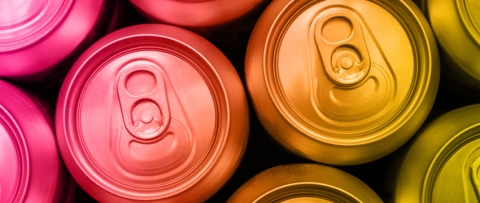
Beverage cans compete in a crowded aisle, where graphics and impact decide the sale. High-impact graphics demand attention, sustainability claims raise expectations, and production efficiency never sleeps. For canmakers and brand owners, the question isn’t just what goes inside, it’s how the beverage can itself must tell the story. That’s where UV and UV LED curable inks step in, transforming two-piece can printing with instant curing, lower environmental impact, and design flexibility that keeps brands ahead of the shelf.
The Advantages of Two-Piece Cans
Two-piece cans have earned their spot at the top of beverage packaging for good reason. A deep-drawn body paired with a separate lid eliminates seams, strengthens structural integrity, and powers high-speed production lines. Decorating these cans has traditionally relied on dry offset printing, where inks must cure quickly, adhere to curved metal surfaces, and survive pasteurization, shipping, and shelf life. Conventional thermal or solvent-based inks do the job, but they bring energy costs, VOC emissions, and process limitations. Enter UV and UV LED curable inks—designed to tackle these challenges head-on, delivering high-impact graphics faster, cleaner, and more sustainably than ever before.
How UV Curable Inks Work
Unlike heat- or solvent-cured systems, UV inks harden the instant ultraviolet light hits them. Photoinitiators trigger rapid polymerization, turning liquid ink into a durable, high-quality film in seconds. Each formulation is carefully balanced: oligomers and monomers form a cured network, photoinitiators activate under UV, pigments deliver vibrant color, and additives ensure adhesion, gloss, and flexibility. The result is graphics that cure on demand, cutting downtime and enabling leaner, more responsive production.
Benefits of UV and UV LED for Canmakers
For canmakers, the benefits stretch beyond print quality. Instant curing reduces dwell time and ramps up line efficiency. UV LED curing systems sip power and produce minimal heat. The inks themselves are 100% solids, no solvents, zero VOCs, ticking sustainability boxes. They resist chemicals, moisture, and abrasion, so cans maintain their look from production to point of sale. These advantages explain why production lines, from global brands to specialty fillers, are weighing UV adoption more seriously than ever.

Planning Your Transition to UV Inks
Switching to UV or UV LED inks isn’t just swapping chemicals. It demands planning as it is a strategic move that touches every part of production. Canmakers must plan carefully, balancing investment, workflow changes, and long-term efficiency. Key considerations include:
- Equipment upgrades: Installing lamp arrays, shielding, and ventilation; retrofits may be required
- Surface preparation: Pretreatment or priming of metal surfaces to ensure adhesion Ink testing: Adhesion, migration, and durability testing to meet food and beverage compliance
- Operator safety: Training in UV light exposure and handling of photoinitiators
- Investment tradeoffs: Mercury lamps are cheaper upfront; LED systems offer longer life, lower energy use, and less heat
Switching from gas ovens to energy-curable equipment powered by electricity can also lead to operational savings, though actual results will vary by facility.
Upfront costs may be higher, but energy savings, reduced waste, and faster production often offset the investment. Leading suppliers include IST Metz, GEW, Heraeus Noblelight, Nordson, and Baldwin Technology. Canmakers serving premium brands, multiple SKUs, or sustainability mandates are often best positioned for adoption.
Digital Direct-to-Can Printing: Flexible Solutions
Offset printing still dominates high-volume lines, but digital direct-to-can printing is changing the game for brands that demand flexibility and distinction. At the heart of this transformation is INXJet MDLM UV curable inks, developed from decades of metal decorating expertise, engineered for the latest digital decorating systems, and built to deliver sharp, high-impact graphics with exceptional clarity. With low migration, pasteurization-ready performance, and compliance with Nestlé, Swiss Ordinance, EuPIA, and CONEG, MDLM inks give canmakers and brand owners the confidence to produce aluminum cans that look as good as they perform.
LINK
MDLM offers sharp detail, vibrant color, and regulatory confidence in digital can printing
The Ink Every Can Deserves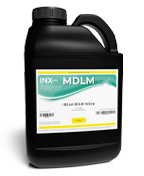
Digital printing offers several advantages:
- Rapid design changeovers: No plates required
- Personalization & promotions: Perfect for local campaigns or seasonal runs
- On-demand production: Minimal inventory and fast turnaround
Considerations for digital printing include slower throughput on long runs and specialized equipment (e.g., Hinterkopf, Tonejet, Velox). Digital shines for craft or specialty beverages, promotional cans, or markets where consumer engagement: QR codes, variable designs, and branding is key. For mainstream volumes, digital complements offset rather than replacing it, but its strategic role is expanding as personalization becomes a differentiator.
The INX CP800 direct-to-object inkjet proofing system prints directly on cylindrical shapes using UV curable ink. It makes prototyping simple, letting you test multiple designs without tying up production line time. This works hand-in-hand with pilot lines that create proof cans with the dry offset process. The trade-off is speed, about 4 to 5 minutes per 12oz can.
Additional Resources
For designers, brand owners, and metal decorators seeking precision in color, the INX 2-Piece Metal Color Catalog offers over 650 true-to-metal swatches and access to the INX Digital Color Library, ensuring every design appears on the can exactly as envisioned.
LINK
INX Color Catalog is the industry’s first true color standard for printing on metal.
Order Your Metal Color Catalog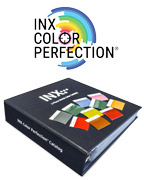
What’s Next in Can Printing Innovation
Innovation in UV curable inks and curing systems shows no signs of slowing. LEDs are emerging as the new standard, delivering lower energy use, less heat, longer lifespan, and higher line efficiency. Next-generation, low-migration inks improve food safety while maintaining recyclability, and hybrid systems combine the speed of offset with the flexibility of digital printing. For detailed insights into UV-curable inks for two-piece can printing, refer to this article on UV-Curable Two-Piece Can Printing Inks.
As brands face rising consumer expectations for sustainability, personalization, and shelf impact, canmakers equipped with UV technology will be the ones setting the pace. 2-piece metal printers using direct-to-can inkjet technology, like the Hinterkopf, are decorating with UV curable inks. For 3-piece flat sheet metal, digital options with UV curable inkjet exist. Barberan and Sacmi are two names leading the way. The technology is ready. The opportunity is yours.
The Bottom Line: A Step-Change in Can Printing
UV and UV LED curable inks aren’t incremental upgrades. They are a step-change in how beverage cans are printed, balancing speed, safety, and sustainability. For canmakers, adoption is a strategic decision shaped by investment, operational priorities, and production goals. For brand owners, the payoff is packaging that protects the planet, powers production, and commands attention on the shelf.
INX International: Where Color Meets Consciousness
Share